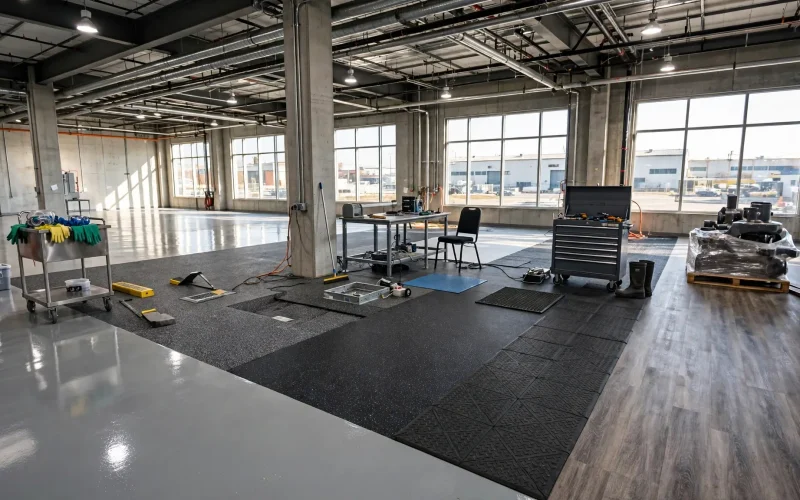
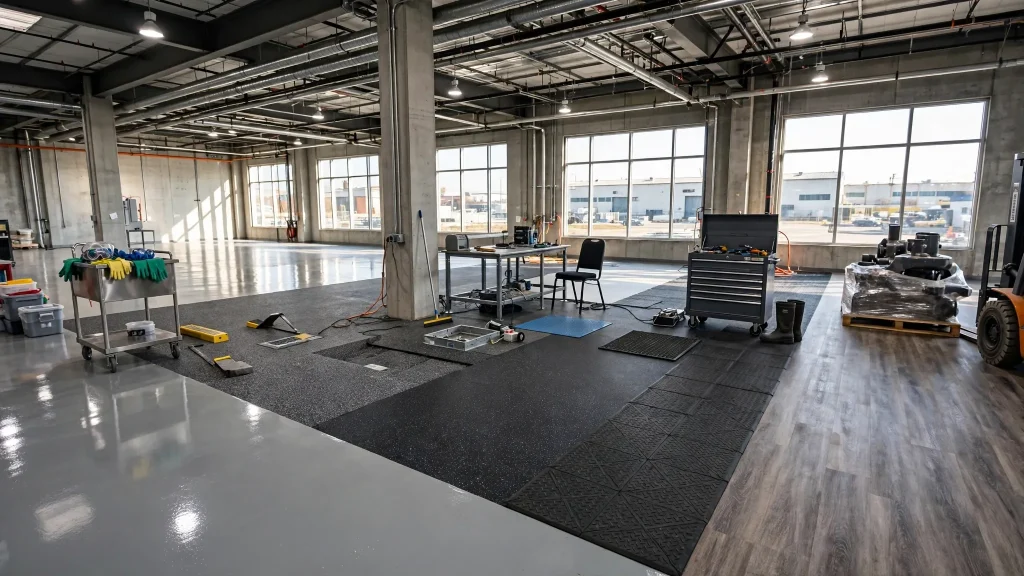
Industrial Flooring plays a critical role in the safety, performance, and longevity of commercial and industrial facilities. Manufacturing plants, warehouses, food processing units, healthcare facilities, and logistics centers all depend on durable flooring systems that withstand heavy traffic, chemical exposure, and demanding daily operations. Choosing the right flooring reduces maintenance costs, improves workplace safety, and extends the life of the building.
Every industry has unique requirements. A warehouse may prioritize impact resistance, while a pharmaceutical facility focuses on hygiene and chemical resistance. We have seen businesses reduce repair costs by selecting flooring systems designed specifically for their operational environment. Understanding available materials and installation methods helps organizations make informed investments that deliver long-term value.
Why Industrial Flooring Matters
Safety, Durability, and Performance
Industrial Flooring directly affects workplace efficiency and employee safety. A properly installed floor minimizes slip hazards, supports heavy machinery, and resists wear from forklifts and equipment. Strong flooring also protects concrete substrates from damage caused by moisture, chemicals, and continuous loading.
Facilities with damaged flooring often experience higher maintenance expenses and unexpected downtime. Industry professionals recommend evaluating traffic volume, environmental conditions, and cleaning requirements before selecting a flooring system. A planned flooring investment typically costs less than repeated repairs over several years.
Key Benefits
Improves workplace safety.
Supports heavy industrial equipment.
Reduces maintenance expenses.
Increases floor lifespan.
Enhances operational efficiency.
Improves appearance and cleanliness.
Types of Industrial Flooring Solutions
Choosing the Right Material
Different Industrial Flooring materials provide different performance advantages. Selecting the correct solution depends on industry requirements, environmental exposure, and maintenance expectations.
| Flooring Type | Best Application | Main Benefits |
|---|
| Epoxy Flooring | Warehouses, factories | Chemical resistance, seamless finish |
| Polyurethane Flooring | Food processing | Thermal shock resistance |
| Polished Concrete | Distribution centers | Low maintenance, durable |
| Vinyl Flooring | Healthcare facilities | Hygiene and comfort |
| Terrazzo Flooring | Commercial buildings | Premium appearance and long lifespan |
| Anti-Static Flooring | Electronics manufacturing | Static electricity control |
Professional installers often recommend site inspections before material selection. Floor condition, moisture levels, and load capacity significantly influence installation success and long-term durability.
Factors to Consider Before Installation
Planning for Long-Term Performance
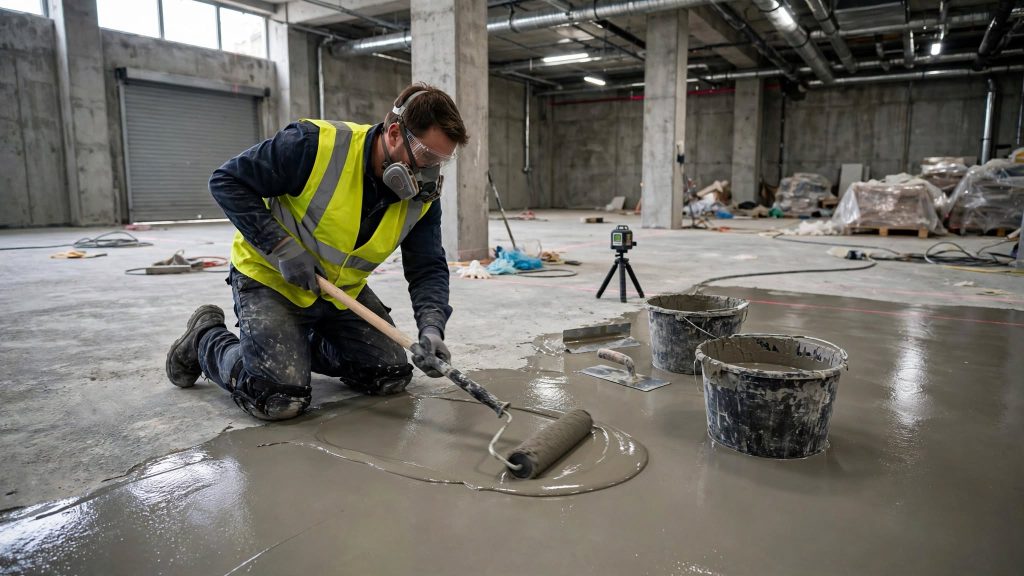
Installing Industrial Flooring requires more than selecting a material. Surface preparation, environmental conditions, and operational needs determine overall performance. Proper concrete preparation creates strong adhesion and prevents future coating failures.
Before installation, businesses should evaluate several factors:
Experienced flooring specialists also perform moisture testing and concrete strength assessments before recommending installation methods. These evaluations reduce project risks and improve flooring lifespan.
Maintenance Best Practices
Protecting Your Investment
Routine maintenance keeps Industrial Flooring performing at its best. Even the strongest flooring systems require scheduled inspections and cleaning to preserve their protective properties. Preventive maintenance also reduces unexpected repair costs and minimizes operational disruptions.
A practical maintenance program should include regular sweeping, prompt spill removal, equipment inspections, and periodic professional assessments. Businesses that follow preventive maintenance schedules typically experience longer service life and improved workplace safety. Facility managers should also document repairs and monitor high-traffic areas to identify early signs of wear before significant damage develops.
How to Choose the Right Industrial Flooring Contractor
Experience Makes the Difference
The quality of Industrial Flooring depends heavily on proper installation. Even premium materials can fail if installers overlook surface preparation or environmental requirements. Selecting an experienced contractor ensures compliance with industry standards and manufacturer specifications.
Look for contractors who provide detailed site evaluations, transparent project timelines, product recommendations, and warranty coverage. Experienced teams explain installation procedures, discuss maintenance requirements, and recommend flooring systems based on operational needs rather than cost alone.
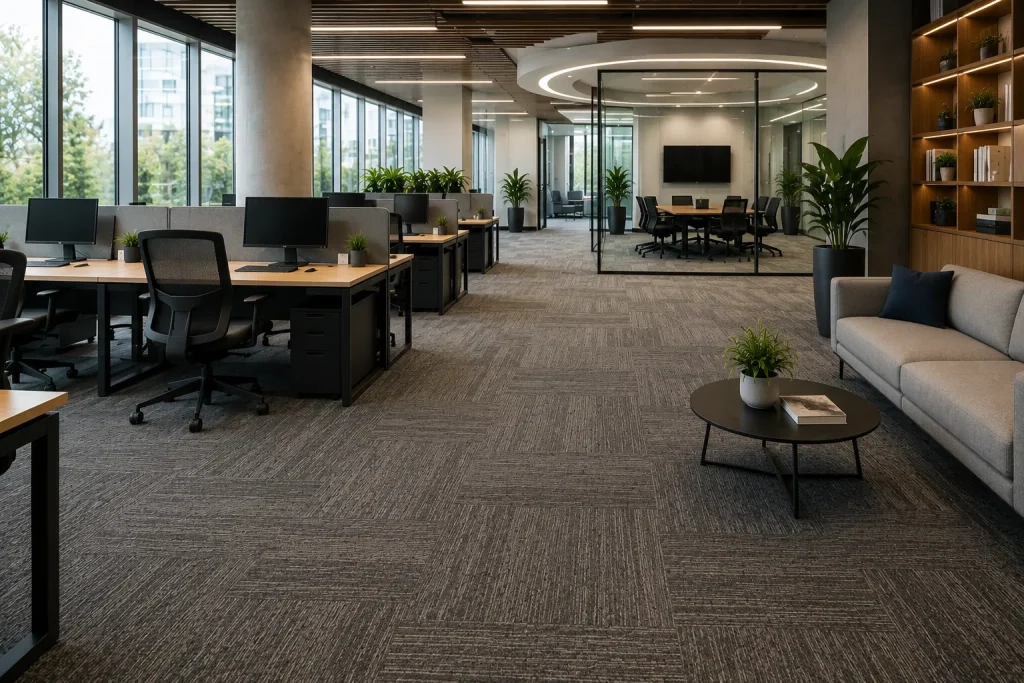
Reviewing previous industrial projects also provides valuable insight into workmanship and long-term performance. Explore our latest insights on how Carpet Flooring Improves Workplace Comfort and Productivity.
Conclusion
Industrial Flooring is a long-term investment that improves safety, productivity, and operational reliability. The right material, professional installation, and preventive maintenance deliver lasting value. By evaluating facility requirements carefully, businesses can select flooring solutions that support daily operations while minimizing maintenance costs for many years.