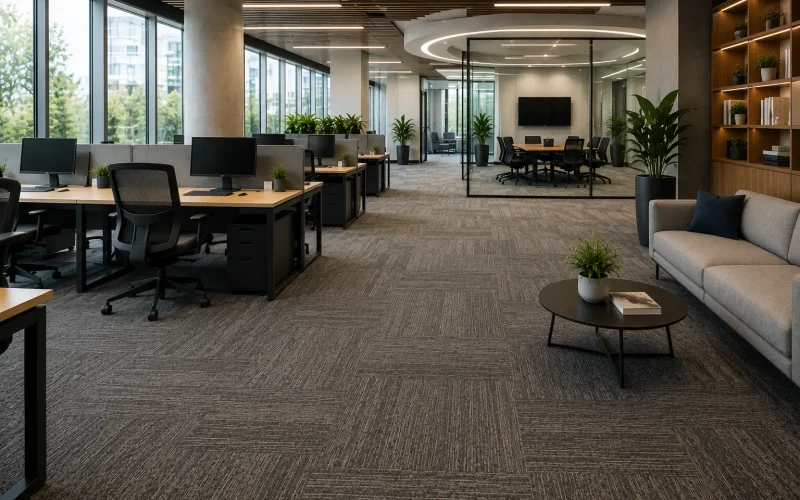
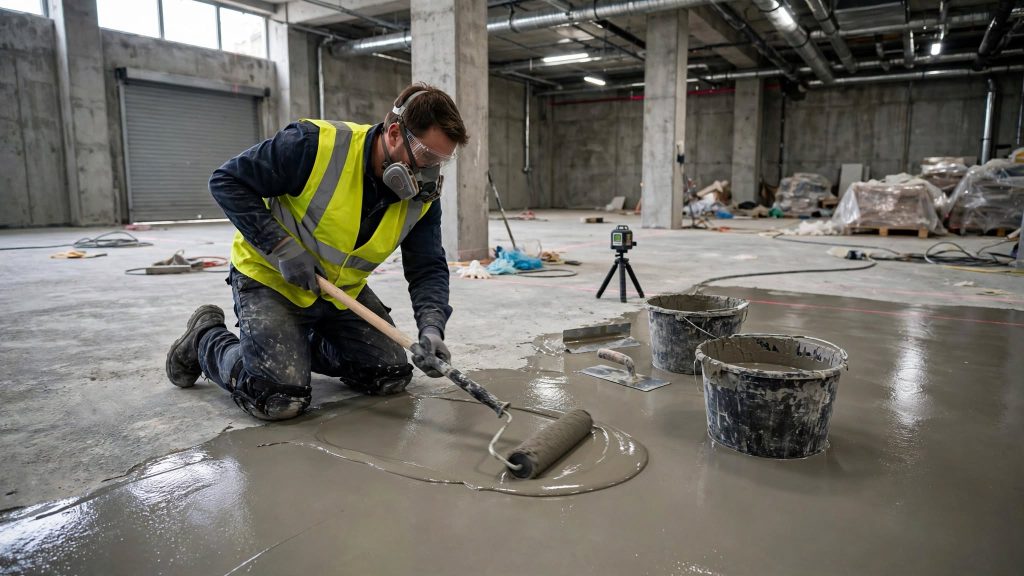
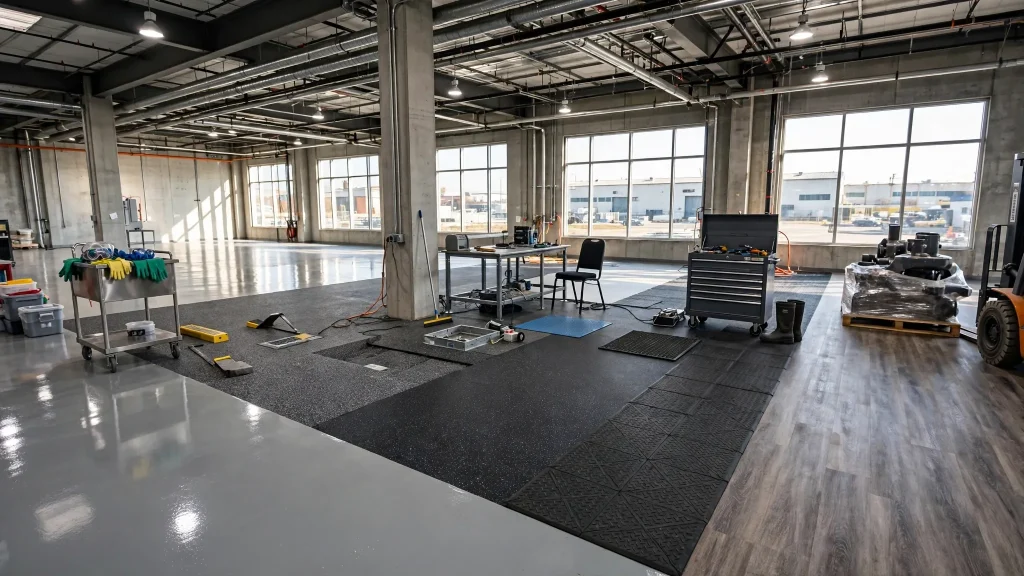
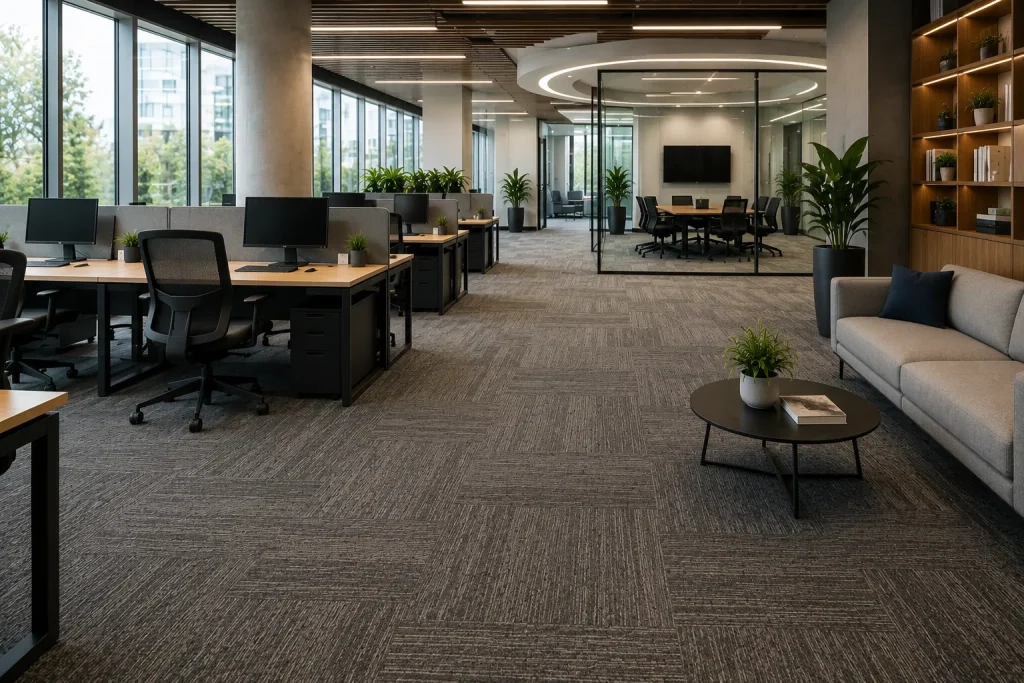
Carpet Flooring plays a significant role in creating comfortable, productive, and professional work environments. Modern workplaces increasingly prioritize employee well-being because comfort directly affects performance. According to the International Facility Management Association, workplace design can improve employee productivity by up to 20%. Flooring is one of the most influential design elements because employees interact with it throughout the day.
Businesses across the United States continue investing in Carpet Flooring due to its ability to reduce noise, improve comfort, and enhance workplace aesthetics. Unlike hard flooring surfaces, carpet provides cushioning underfoot, making long workdays less physically demanding. This benefit is especially important in offices where employees spend eight or more hours daily moving between workstations, meeting rooms, and collaborative spaces.
Workplace comfort also affects employee satisfaction and retention. Research published by the Center for the Built Environment found that comfortable work environments contribute to higher job satisfaction and lower absenteeism. Carpet Flooring supports these goals by creating quieter, warmer, and more inviting spaces. As organizations seek ways to improve performance and employee experience, carpet remains one of the most practical flooring solutions available.
The Impact of Carpet Flooring on Employee Comfort
Reducing Physical Fatigue Throughout the Workday
Carpet Flooring provides a softer walking surface than concrete, tile, or vinyl floors. This cushioning effect reduces pressure on joints, muscles, and the lower back. Employees who stand or walk frequently experience less fatigue when working on carpeted surfaces. Occupational health studies show that softer flooring can decrease lower-body strain by approximately 12% compared to hard surfaces.
Comfort directly influences concentration levels. When employees experience less physical discomfort, they can focus longer on tasks without distraction. Carpet Flooring creates a more ergonomic environment that supports employee well-being. This benefit becomes increasingly important in large office settings where workers travel between departments multiple times daily.
Additional comfort benefits include:
Reduced leg and foot fatigue.
Improved walking comfort.
Better thermal insulation.
Enhanced workplace appearance.
Increased employee satisfaction.
Organizations investing in employee wellness often recognize flooring as a foundational component of workplace design.
How Carpet Flooring Improves Workplace Productivity
Creating a Quieter and More Focused Environment
Noise remains one of the largest productivity challenges in modern offices. Open-plan workspaces often experience distractions from conversations, phone calls, and foot traffic. Carpet Flooring absorbs sound significantly better than hard flooring materials. Studies from the Carpet and Rug Institute indicate that carpet can reduce impact noise by up to 34 decibels.
Lower noise levels help employees maintain focus and reduce cognitive fatigue. Research from Harvard Business Review found that workplace interruptions can reduce productivity by as much as 40%. Carpet Flooring helps minimize these interruptions by absorbing footsteps and reducing sound transmission between rooms.
A quieter environment benefits multiple workplace functions:
Improved concentration.
Better meeting room acoustics.
Reduced workplace stress.
Enhanced collaboration quality.
Greater overall efficiency.
These productivity gains make carpet a practical investment for offices focused on performance and employee engagement.
Carpet Flooring and Indoor Environmental Quality
Supporting Healthier Workplace Conditions
Modern Carpet Flooring contributes positively to indoor environmental quality when properly maintained. Advanced carpet products use low-volatile organic compound materials that meet strict environmental standards. The Carpet and Rug Institute Green Label Plus program certifies products with low emissions to support healthier indoor spaces.
Carpet also improves thermal efficiency. The U.S. Department of Energy recognizes carpet as an effective insulating material that helps maintain indoor temperatures. Better insulation reduces cold spots and creates a more comfortable work environment throughout the year.
The table below highlights key workplace benefits associated with Carpet Flooring.
| Workplace Factor | Benefit of Carpet Flooring | Measurable Impact |
|---|
| Noise Control | Sound absorption | Up to 34 dB reduction |
| Employee Comfort | Reduced fatigue | Up to 12% lower strain |
| Thermal Efficiency | Improved insulation | Lower heat loss |
| Workplace Safety | Better slip resistance | Fewer slip incidents |
| Employee Satisfaction | Enhanced comfort | Higher retention rates |
Industry experts often recommend carpet for offices, educational facilities, and customer-facing environments because of these combined benefits. Explore our solutions for Modern Carpet Flooring.
Long-Term Business Value of Carpet Flooring
Balancing Performance, Appearance, and Cost Efficiency
Carpet Flooring delivers long-term value beyond comfort and productivity. Commercial carpet tiles typically last between 10 and 15 years when properly maintained. Many businesses choose carpet tiles because damaged sections can be replaced individually, reducing maintenance costs over time.
Professional workplace designers frequently recommend carpet for high-traffic office areas because it combines durability with visual appeal. Carpet Flooring is available in hundreds of colors, patterns, and textures, allowing organizations to reinforce brand identity while maintaining functionality.
A 2024 workplace design survey found that 68% of employees preferred office environments with softer flooring materials. Employee preferences matter because workplace satisfaction directly influences retention and engagement. Carpet Flooring helps organizations create welcoming spaces that support both operational goals and employee needs.
When businesses evaluate flooring options, they often find that carpet offers an effective balance between comfort, acoustics, aesthetics, and long-term value.
Conclusion
Carpet Flooring remains one of the most effective ways to improve workplace comfort and productivity. Its ability to reduce noise, minimize physical fatigue, and create a more welcoming environment supports both employee well-being and business performance. Research consistently shows that comfortable workplaces contribute to higher satisfaction, stronger focus, and improved efficiency. Modern carpet solutions also offer durability, thermal insulation, and design flexibility that meet the demands of today’s professional environments. For organizations seeking practical ways to enhance workplace experience while supporting productivity goals, Carpet Flooring continues to deliver measurable benefits and lasting value.