A finished floor can only perform as well as the surface beneath it. When a subfloor has dips, high spots, cracks, or uneven transitions, those imperfections can affect the flooring installed above. Floor leveling addresses these problems before the final flooring system goes down, creating a flatter and more consistent base.
Proper floor leveling is relevant to many residential, commercial, and industrial projects. Whether the finished surface will be tile, vinyl, carpet, wood, or a resin-based coating, preparing the substrate carefully can improve installation quality and reduce avoidable problems later.
What Is Floor Leveling?
Floor leveling is the process of correcting uneven areas in a concrete slab or other suitable subfloor. The goal is to create a surface that meets the flatness and installation requirements of the selected flooring material.
Despite the name, a floor does not always need to be perfectly horizontal. In many projects, the more important requirement is flatness. A floor may intentionally have a slight slope for drainage while still providing a smooth, consistent surface.
Different methods can be used depending on the condition of the substrate. These may include grinding down raised sections, filling low spots, repairing damaged areas, or applying a leveling compound across larger sections.
Why an Even Subfloor Matters
Flooring materials react differently to irregular surfaces, but most require a properly prepared base. Installing directly over an uneven substrate can transfer existing imperfections into the finished floor.
For example, rigid tiles may sit poorly when the surface underneath has noticeable variations. Flexible flooring can sometimes reveal dips, ridges, or repaired areas through the finished material. Coating systems may also develop inconsistent thickness when applied over an irregular slab.
Floor leveling helps create a more predictable installation surface. Installers can position materials more consistently without trying to compensate for significant variations as they work.
For larger facilities where substrate preparation is part of a broader flooring plan, The Complete Guide to Industrial Flooring Solutions provides useful context for understanding how different flooring systems relate to the conditions beneath them.
How Floor Leveling Supports a Stronger Foundation
It Creates Consistent Contact
Many flooring systems depend on good contact between the finished material, adhesive, underlayment, or coating and the substrate. Low areas can interfere with that contact, while high spots may place unwanted pressure on particular sections.
Leveling reduces these irregularities and creates a more uniform base for installation.
It Reduces Stress on Finished Flooring
An uneven substrate can cause certain parts of a floor to carry more stress than others. With rigid materials, movement or unsupported areas may contribute to cracking, shifting, or damaged joints.
Correcting the substrate first gives the finished flooring a more stable surface to rest on.
It Improves the Quality of the Installation
Leveling also makes installation more manageable. Large dips and raised sections can make it difficult to maintain consistent flooring alignment or coating thickness.
A properly prepared surface allows installers to focus on the flooring system itself rather than continually correcting problems caused by the substrate.
Common Floor Leveling Methods
The right approach depends on the type and extent of the unevenness.
Grinding High Areas
Concrete grinding can remove raised spots and surface irregularities. It is often useful when isolated sections of a slab sit above the surrounding floor.
Grinding may also be part of broader concrete surface preparation before coatings or other flooring materials are installed.
Filling Low Spots
Localized depressions can sometimes be repaired with a suitable patching or leveling material. The product must be compatible with both the existing substrate and the flooring system that will be installed afterward.
Applying Self-Leveling Underlayment
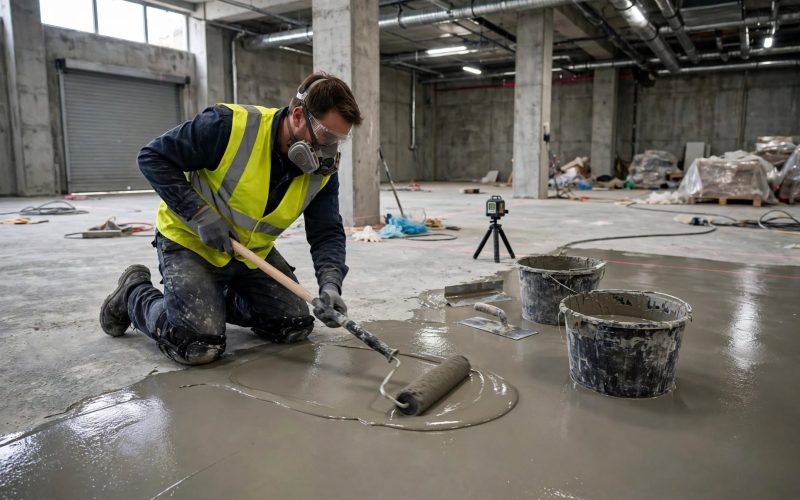
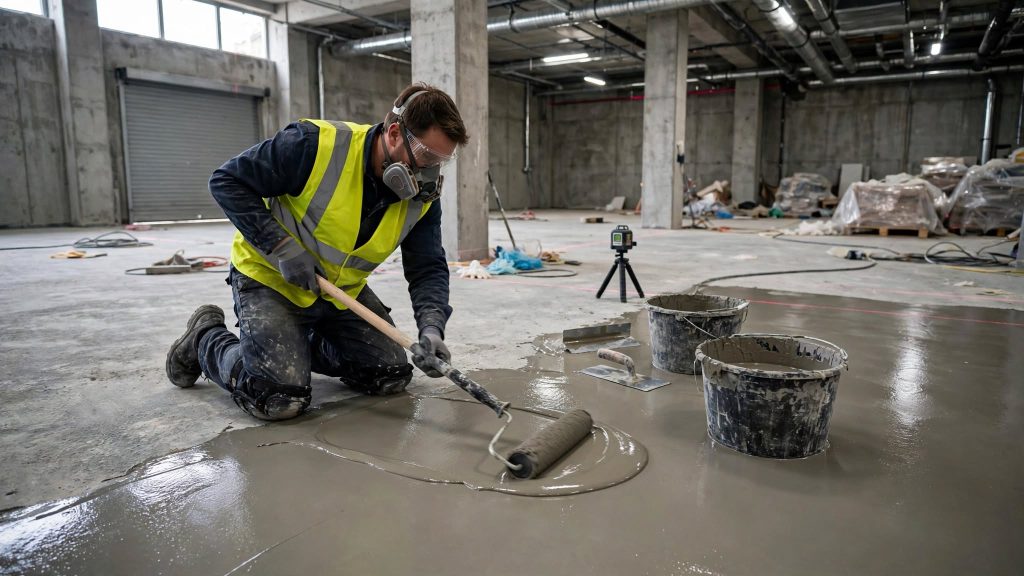
For areas with widespread variations, a self-leveling underlayment may be appropriate. These cement-based materials are designed to flow across a prepared surface and settle into low areas.
The term “self-leveling” does not mean preparation can be skipped. Cleaning, priming, repairing cracks, controlling moisture where necessary, and following the product’s application requirements remain important.
Floor Leveling Begins With Subfloor Assessment
Applying leveling material without first identifying the underlying problem can lead to poor results. Before work begins, the substrate should be inspected for cracks, loose material, contamination, moisture concerns, damaged sections, and significant height differences.
Some unevenness may come from the original construction of the slab, while other problems can develop through wear, movement, previous repairs, or deterioration.
The planned flooring material matters as well. Tile, luxury vinyl, hardwood, carpet, and resin flooring can have different substrate requirements. The preparation method should therefore be selected with the final flooring system in mind.
Practical Considerations Before Leveling a Floor
Surface cleanliness is important because dust, grease, old adhesive, and loose material can interfere with bonding. Existing coatings or residues may also need to be removed before leveling products are applied.
Cracks deserve separate attention. Simply covering a crack with leveling compound does not necessarily address movement or the reason the crack formed. Significant or active cracking may require further assessment before installation continues.
Drying and curing conditions also matter. Flooring should not be installed over leveling materials before they are ready for the next stage specified by the product manufacturer.
Finally, floor height should be considered around doors, thresholds, drains, stairs, equipment bases, and adjoining rooms. Adding leveling material changes the finished elevation, which can create transition issues if this is not planned in advance.
Leveling Is Part of a Complete Flooring System
Floor leveling should not be viewed as an isolated cosmetic step. It works alongside cleaning, crack repair, moisture evaluation, surface preparation, priming, and correct installation practices.
A visually smooth floor is useful, but appearance alone does not confirm that the substrate is ready. The surface also needs to be stable, clean, compatible with the chosen materials, and prepared according to the flooring system’s requirements.
Conclusion
Floor leveling creates a stronger flooring foundation by correcting irregularities before they can affect the finished surface. Grinding high spots, filling depressions, repairing damaged areas, and using appropriate leveling compounds can produce a flatter and more consistent substrate.
The correct method depends on the condition of the existing floor and the material being installed. Careful assessment and preparation help create a foundation that supports cleaner installation, more consistent contact, and better overall flooring performance.