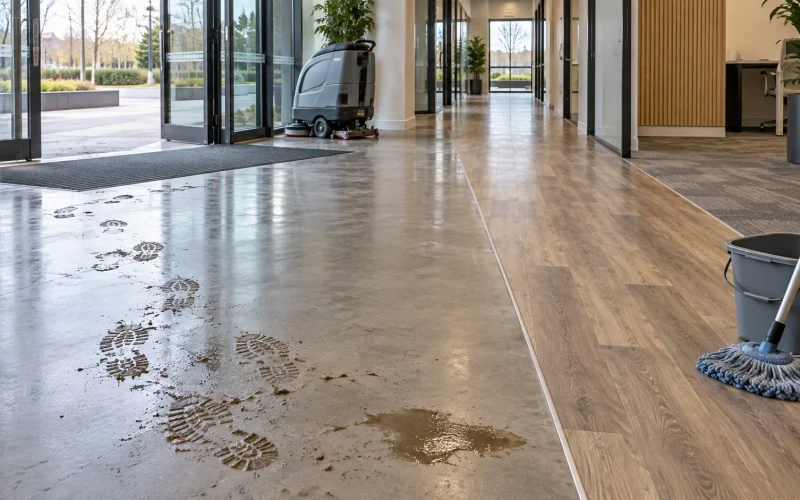
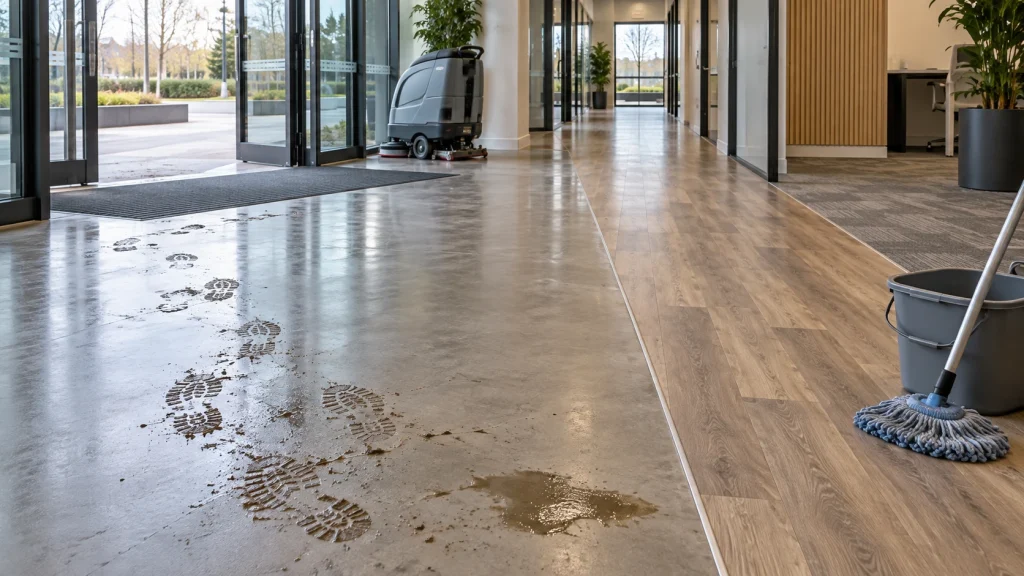
Choosing a floor is easier when you picture an ordinary cleaning day. Will someone sweep up dry dust, mop muddy footprints, or scrub away grease? The best flooring material for a space has to suit both the people using it and the work required to keep it clean. A surface that looks appealing on installation day can become a burden if its cleaning needs exceed the time, equipment, or access available.
Start with the cleaning routine
Before comparing flooring materials, write down what reaches the floor and how often it must be removed. Foot traffic matters, but so do tracked-in grit, food spills, moisture, wheeled furniture, and chemicals used nearby. Think about who will clean the floor, when they can do it, and whether furniture or equipment blocks access.
A useful assessment covers:
- Type of dirt: Dry dust can often be vacuumed or swept; grease and sticky spills may need a different cleaning method.
- Frequency: A busy entrance may need attention several times a day, while a quieter room may need less frequent cleaning.
- Moisture: Occasional damp mopping presents a different challenge from regular spills or wet footwear.
- Access: Large open areas are easier to clean than crowded rooms with many edges and obstacles.
These details help narrow the options before appearance or initial cost takes over the decision.
Match the surface to the demands of the room
Vinyl for frequent cleaning
Vinyl flooring is often considered where routine cleaning and moisture resistance matter. Its relatively smooth surface can make everyday dirt and spills straightforward to remove. The exact cleaning method still depends on the product, its finish, and how it has been installed. Seams and edges deserve particular attention where water is common; the material alone does not make every installation suitable for a wet area.
In a school corridor, for example, wet shoes and frequent foot traffic may make a floor that can be cleaned regularly more practical than one that needs gentle, infrequent care. The choice should also account for abrasion from grit at entrances and the cleaning equipment the school uses.
Carpet and carpet tiles for dry areas
Carpet can add comfort and help reduce noise, making it worth considering in offices, bedrooms, and other spaces where people spend time. Its maintenance demands are different from those of a smooth floor. Regular vacuuming removes loose dirt, while spills need prompt attention and some areas will require periodic deeper cleaning.
Carpet tiles offer a practical advantage where a small area is likely to wear or become stained: individual tiles may be replaceable, provided matching material is available. That does not eliminate routine care. If staff cannot vacuum often enough, or frequent wet spills are expected, carpet may be a poor fit for that particular zone even when its acoustic benefits are welcome elsewhere.
Hard-wearing finishes for demanding workspaces
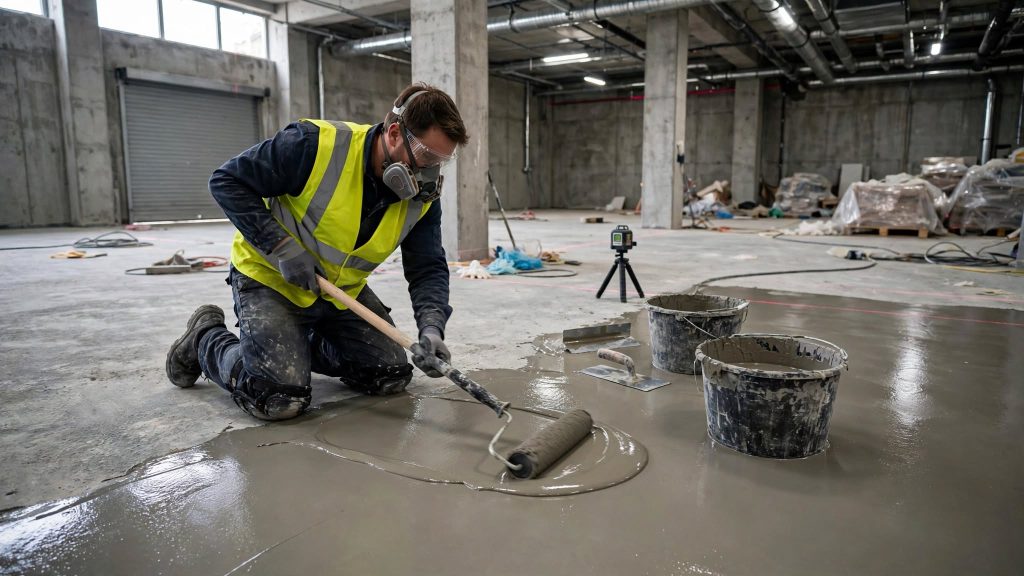
Industrial floors may face rolling loads, repeated washing, or substances that are difficult to remove. Epoxy and other specialist coatings can be specified for such uses, but their suitability depends on the actual exposure, the condition of the substrate, and the selected system. A finish chosen for mechanical wear may have different cleaning needs from one chosen for chemical exposure.
In a workshop where oil may reach the floor, ask how spills will be contained and removed before selecting a coating. Also consider whether the finished surface needs texture for grip. More texture can help underfoot in some conditions, yet it may hold dirt and take more effort to scrub. This trade-off should be settled with the intended cleaning routine in mind.
For more detailed information on this topic, read our guide on How to Choose Paint Sheen for Every Interior Room.
Look beyond the surface material
Joints, edges, and the floor beneath the finish influence maintenance as much as the visible material. Dirt can collect at poorly finished transitions, while uneven areas can make mopping or machine cleaning less effective. Floor preparation, including leveling where needed, helps create a sound base for the selected covering.
Some finishes have their own care requirements. Ground concrete, terrazzo, and coated floors should be cleaned with methods suitable for their particular finish rather than treated as interchangeable hard surfaces. Before purchase, check the manufacturer’s care instructions for cleaning products, equipment, and any periodic treatment. If a proposed routine depends on specialist work that the building cannot realistically arrange, reconsider the specification.
Compare the effort over the floor’s working life
Purchase and installation are only part of flooring cost. Add the time needed for daily cleaning, the likely need for deeper cleaning, and the ease of repairing a damaged section. A floor that is simple to mop may save routine effort, while a replaceable tile may make localized damage easier to manage. Neither advantage automatically outweighs the other; the pattern of use decides which matters more.
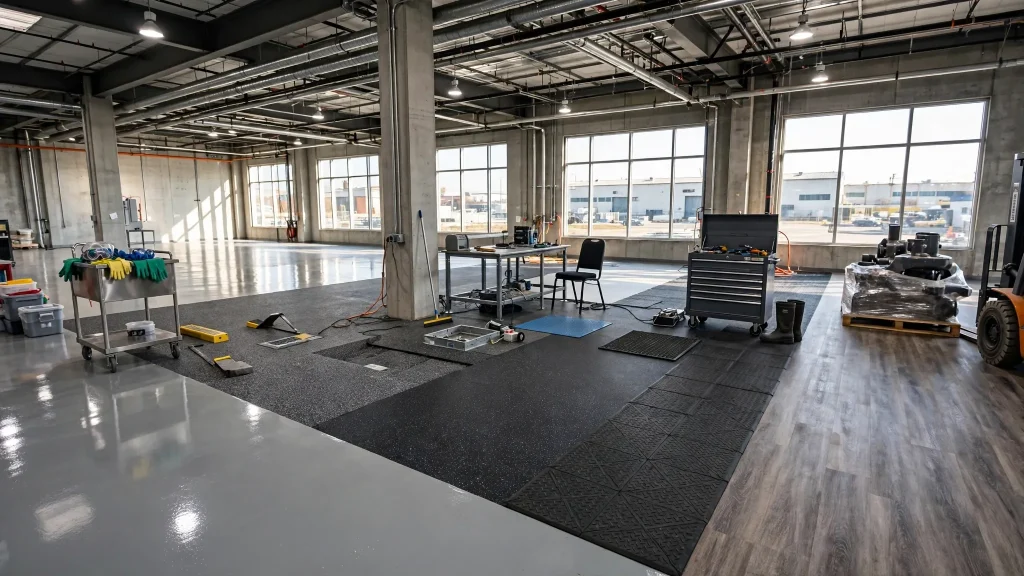
It also helps to divide a building into zones instead of asking one material to do everything. An entrance deals with grit and moisture. A meeting room may place greater value on comfort and sound. A service area might need a surface suited to its cleaning products and equipment. Choosing by zone can give each floor a realistic maintenance plan.
The strongest choice is one that staff can clean consistently using methods appropriate to the material. Describe the dirt, spills, traffic, and cleaning schedule first; then compare products and installation details against those conditions. A floor that fits the routine is easier to care for and less likely to create avoidable work later.