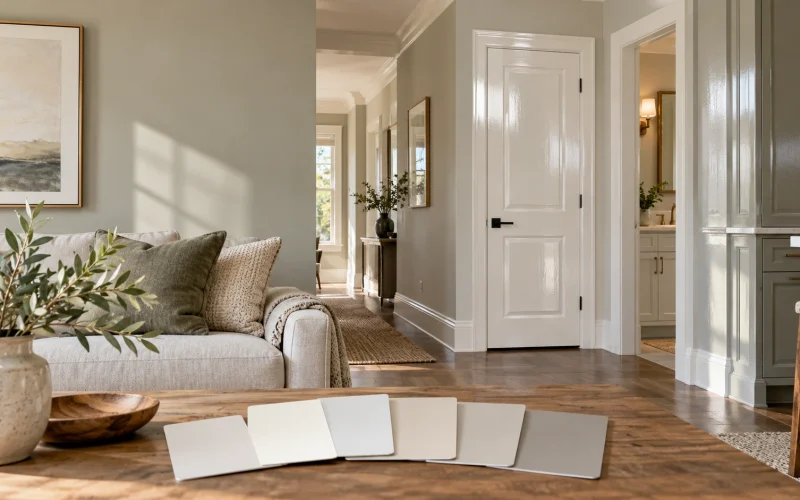
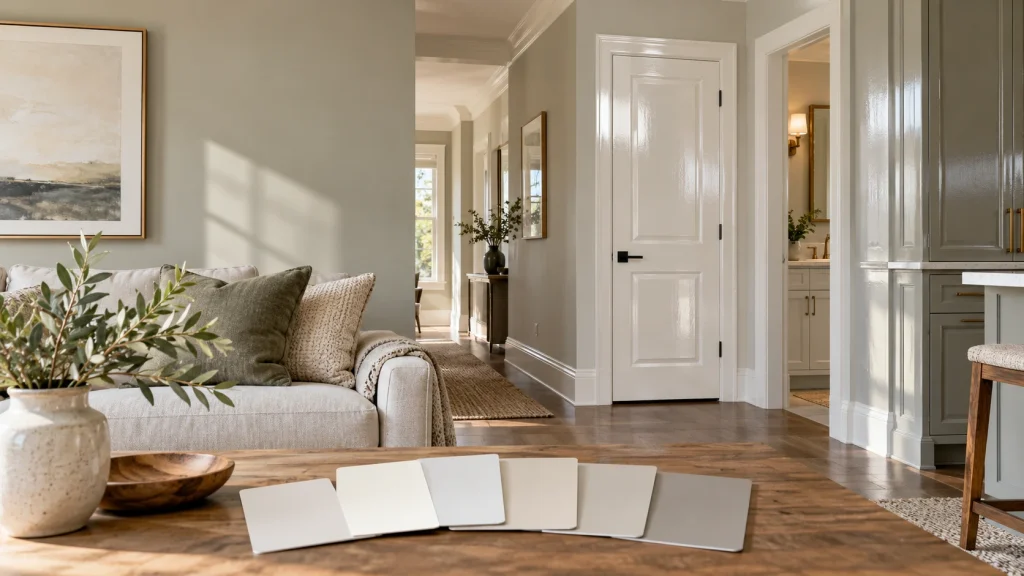
Paint sheen changes how a room looks and how its surfaces handle everyday use. A color that appears soft on a matte wall can look brighter on a glossy door, while light from a window can make small surface flaws more noticeable. To choose paint sheen for an interior room, consider what you are painting, how often it gets touched or cleaned, and how smooth the surface is.
What the sheen names mean
Sheen describes how much light a dried paint surface reflects. Product names and finishes vary by manufacturer, so check a sample rather than relying on the label alone. These are the usual choices:
- Flat or matte: Little visible shine. It gives walls and ceilings a calm appearance and tends to draw less attention to minor imperfections. Some matte products are washable, but cleaning performance depends on the paint.
- Eggshell: A subtle sheen that offers a middle ground for many walls. It adds a little reflected light without looking glossy.
- Satin: A more noticeable sheen, often chosen for walls that need regular wiping and for some woodwork. It can reveal uneven preparation, especially under angled light.
- Semi-gloss: A distinct shine commonly used on trim, doors, and other details that receive frequent handling.
- Gloss: A highly reflective finish that makes a feature of smooth, carefully prepared surfaces. Marks and irregularities are usually easier to see.
A higher sheen does not automatically mean a better paint. Modern formulations differ, and a good quality matte paint may clean more easily than a lower quality satin product. Compare the manufacturer’s guidance for the surface and the level of cleaning you expect.
Match the finish to the room
Living rooms and bedrooms
In spaces with modest wear, matte or eggshell is often a comfortable choice for walls. Both keep the emphasis on color rather than reflections. Matte can be especially useful where daylight falls across a long wall and highlights small bumps or old repairs. Eggshell may suit a living room where occasional fingerprints need wiping.
Ceilings are commonly painted flat or matte because they do not usually need frequent cleaning and because low reflection helps the surface look even. For a child’s bedroom or a busy family room, think beyond the room name: a wall beside a desk, play area, or light switch may receive more contact than the others. A washable wall paint may matter more there than the difference between two nearby sheen levels.
Kitchens and bathrooms
Kitchen walls near food preparation and bathroom walls exposed to moisture may need more frequent cleaning. Eggshell or satin can be practical options, provided the chosen product is suitable for the room. Pay particular attention to the paint’s stated use and cleaning instructions; sheen alone does not tell you whether it is appropriate for a damp area.
For example, a kitchen dining wall might look good in eggshell, while a wall that collects frequent splashes may call for a finish and product designed for easier wiping. Neither choice replaces proper surface preparation or ventilation. Where water regularly hits a surface, check whether paint is the right finish for that location at all.
Hallways, stairs and entryways
These spaces collect scuffs from bags, coats and hands. A durable eggshell or satin paint is often worth considering for walls, particularly at lower levels and around corners. If the wall has visible patching or textured plaster, test satin first: the extra reflection can make those differences stand out.
You can also treat walls and woodwork differently. A quieter eggshell wall beside semi-gloss skirting boards creates a clear distinction and makes frequently touched details easier to wipe. Keeping the wall finish less reflective prevents a narrow hallway from becoming visually busy under strong lighting.
Choose separately for trim, doors and built-ins
Doors, frames, skirting boards and cabinet fronts have different demands from the walls around them. They are handled, bumped and cleaned more often. Satin or semi-gloss is a common choice, depending on the look you want and the condition of the surface. Gloss can give a striking, polished appearance, but it rewards careful sanding and filling because defects remain visible.
Do not assume that one sheen must cover every painted surface in a room. A matte wall with satin trim can feel restrained; an eggshell wall with semi-gloss trim creates more contrast. If you are refreshing only the walls, compare your sample against the existing woodwork. The same color in two sheens may appear different once light catches it.
Paint intended for walls is not necessarily suited to doors or furniture. Choose a product made for the material and expected wear, then follow its directions for preparation and application. This matters as much as choosing between satin and semi-gloss.
For more detailed information on this topic, read our guide on How Floor Leveling Creates a Stronger Flooring Foundation.
Check the surface and the light before deciding
Sheen affects how readily the eye notices imperfections. Glossy finishes reflect light in a more defined way, which can emphasize roller marks, dents, and uneven repairs. Lower sheens soften their appearance, although they do not fix the underlying surface. If a wall is badly marked or uneven, cleaning, filling, sanding, and priming as needed are better starting points than selecting a finish to hide it.
Look at the room at different times of day. A wall facing a window may show sheen more clearly than one lit from the front. Sample the actual paint on a small prepared area or sample board, and view it alongside the flooring, furnishings, and trim. Let it dry before judging: wet paint can look different from the finished surface.
Finally, consider how you will clean the room. Repeated hard scrubbing can affect the appearance of any painted surface, and cleaning advice varies by product. If a wall is likely to need frequent attention, check its washability rather than selecting the shiniest option by habit. The most useful sheen is the one that suits the surface, the light and the way the room is used.